Most rebrands happen too late
Most brand identities are built for launch rather than longevity, and that is not a criticism. It is a reflection of reality.
When you are launching a fashion, lifestyle or retail business, momentum matters more than perfection. You need assets quickly. You need to look credible. You need to get to market and test demand. In that phase, speed is a strategic advantage.
But growth changes the equation.
Got a project in mind and want to get in touch?

As revenue increases and complexity grows, what once felt agile can begin to feel fragile. Decisions that were perfectly acceptable at launch start to create friction at scale. Not dramatic friction. Subtle friction. The kind that shows up in lower conversion rates, increased advertising costs and a quiet lack of confidence in pricing conversations.
Rory Sutherland frequently argues that perceived value often outweighs functional value. In sectors like fashion and luxury retail, this is particularly true. Customers are not just buying product. They are buying meaning, identity and reassurance. Your brand is the container that holds all of that.
If that container was built for speed rather than structure, cracks begin to show.
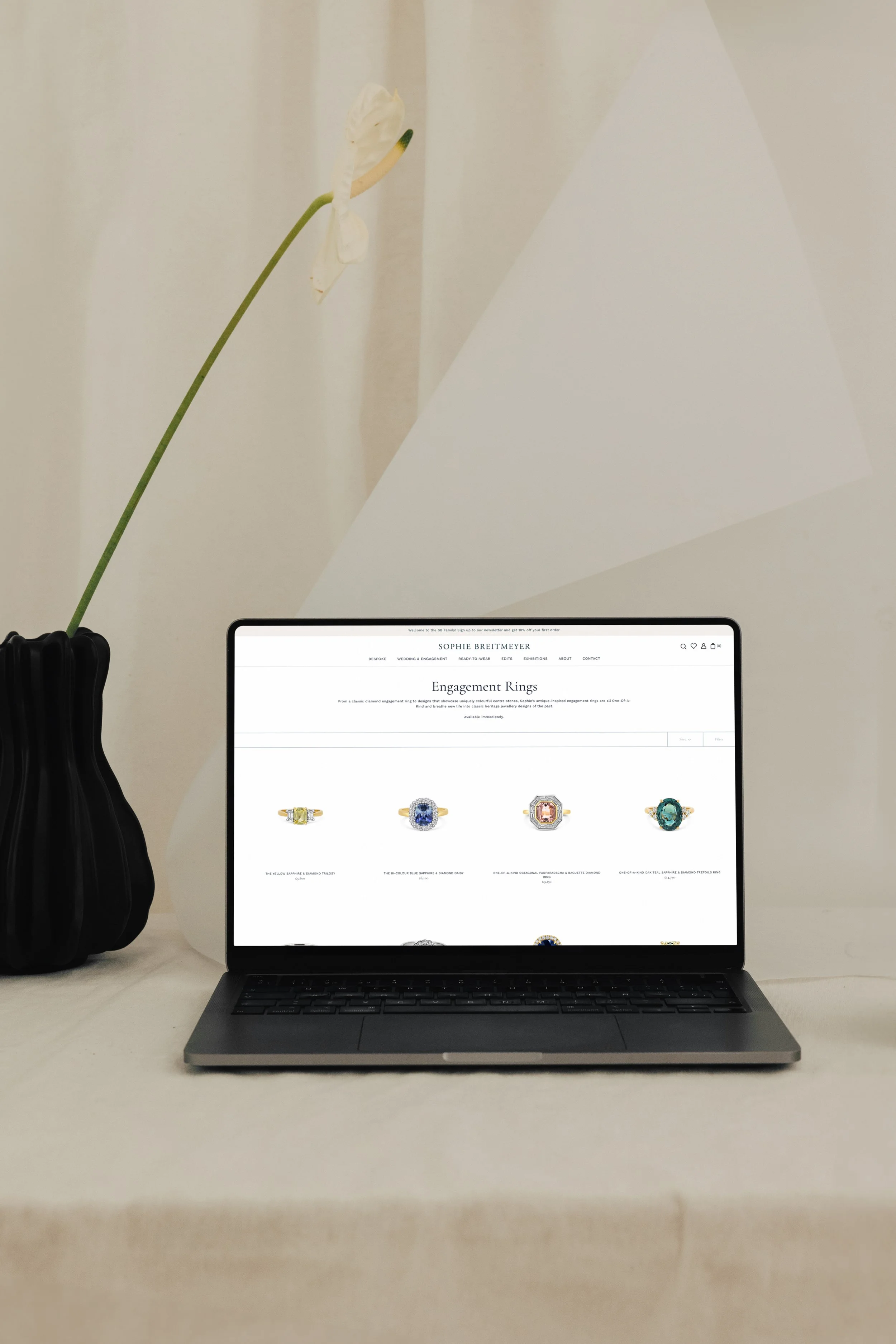
One of the most common signs we see is misalignment between pricing and presentation. A brand raises its prices because the product quality justifies it, yet the website still communicates early stage energy. Typography lacks hierarchy. Imagery lacks cohesion. Product pages describe features but do not convey emotion. Nothing is obviously wrong, but nothing feels elevated either.
Jakob Nielsen’s research into usability consistently highlights how small inconsistencies compound cognitive load. When users encounter friction, even subtle friction, they disengage. The same principle applies to brand systems. Inconsistent visual language, unclear messaging and fragmented touchpoints increase mental effort. And increased mental effort reduces conversion.
Byron Sharp’s work in How Brands Grow reminds us that mental availability drives growth. Mental availability is strengthened through distinctive, consistent brand assets. Not through constant reinvention. Not through trend chasing. Through coherence.
This is where many growing brands find themselves at a crossroads.
They assume the solution is a full rebrand. Sometimes it is. Often it is not.


More frequently, the solution lies in structural refinement. Clarifying the emotional centre of the brand. Defining a clear typographic system. Aligning packaging, website and social presence. Refining UX so that browsing becomes buying. Reducing cognitive load. Increasing perceived value.
Marty Neumeier defines a brand as a gut feeling. That feeling is shaped slowly and reinforced consistently. It cannot stabilise if the system underneath it is unstable.
If your business has evolved significantly since launch, it is worth asking whether your brand was built for momentum or for maturity.
The strongest retail brands we observe do not simply look good. They feel coherent. Their pricing makes sense because their presentation supports it. Their marketing performs because their foundation is strong. Their growth feels lighter because friction has been designed out of the system.

If you recognise this tension in your own business, you are not behind. You are evolving.
We share deeper frameworks, recommended books and talks we are studying, and more structured thinking around brand authority with our subscribers each month.
You can join via our newsletter sign-up pop-up.
And if you would like to explore how commercially focused design can support your next phase of growth, you can start here.